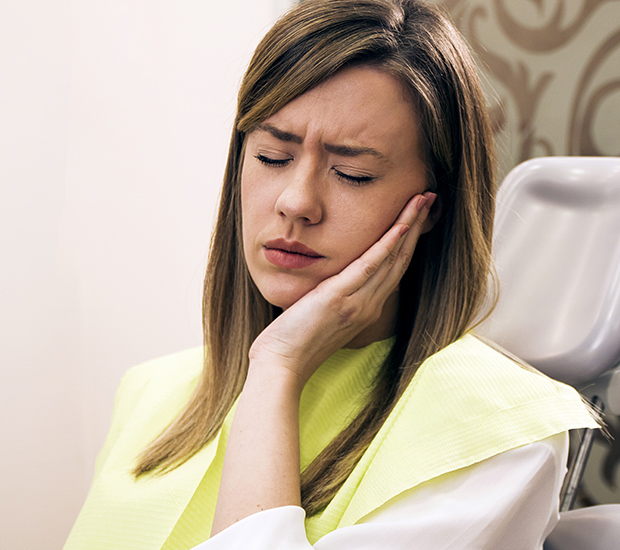
TMJ Dentist Rosenberg, TX
The temporomandibular joints, or TMJs, are responsible for opening and closing the mouth. The term refers to the jaw as well as nerves, muscles, and ligaments connected to it. TMJ treatment can help patients find relief for jaw discomfort, soreness, and pain. TMJ treatment is available at KRB Dentistry in Rosenberg and the surrounding area. Our team of dental professionals performs a thorough evaluation to identify potential factors contributing to the patient’s TMJ pain. To schedule a personal evaluation and get started with TMJ treatment, call (832) 361-3929 right away.
Why Temporomandibular Joints Are So Important
The mouth has one temporomandibular joint on each side. These joints connect the jaw to the rest of the face. Besides moving up and down, they also provide motion from side to side. This flexibility is what allows people to talk, laugh, and eat. These activities are vital parts of life.
On the inside, these joints are covered with cartilage to protect them. A special disk rests between the ball and the socket to provide extra cushioning. Muscles and tendons connected to the jaw hold it in place and also assist with motion.
“Besides moving up and down, they also provide motion from side to side.”
Temporomandibular Disorders (TMD)
Damage to the individual components of TMJ can lead to several serious problems. These include:
- Intense headaches
- Ear pain
- Chronic TMJ pain
- Tense facial muscles
- Inability to open or close the mouth
These conditions are known as temporomandibular disorders (TMD). Many people call them TMJ, though. A TMJ dentist understands how to alleviate joint pain symptoms using a combination of physical therapy, anti-inflammatory medications, and advanced treatment options.
“These conditions are known as temporomandibular disorders or TMD.”
Causes of TMD
Medical professionals are not entirely sure what causes TMD. According to the Mayo Clinic, pain may result from a combination of physical and genetic factors. Certain conditions can increase your risk of developing TMJ problems or contribute to pain:
- Arthritis: Rheumatoid arthritis and osteoarthritis can damage cartilage and expose sensitive nerves in the jaw, leading to chronic pain and inflammation of surrounding tissues.
- Jaw injury: A sudden blow or fracture can hurt the TMJ and related bones, cartilage, or disks. Misaligned or damaged parts of this sensitive area can provoke severe pain almost immediately.
- Dislocation: A dislocated jaw can have long-term effects on the tendons, cartilage, and muscles in the affected area.
- Tooth alignment issues: Some people are born with severely misaligned teeth, which can worsen joint discomfort and lead to improper wear.
- Chronic grinding or clenching of teeth: Constantly clenching teeth or grinding them increases the risk of developing TMD and makes it harder to treat inflammation.
- Stress: People under a lot of stress may develop TMJ pain and inflammation if they start grinding or clenching their teeth.
“According to the Mayo Clinic, pain may be due to a combination of physical and genetic factors.”
Check out what others are saying about our dental services on Yelp: TMJ Dentist in Rosenberg, TX
How a TMJ Dentist Can Help
There are many treatments to help with TMJ pain. Some reduce inflammation of sore tissues and strengthen the patient’s jaw muscles. Other therapies promote relaxation and help to ease tense muscles and tendons.
Another way TMJ dentists provide relief is by correcting poor dental alignment. When teeth fit together correctly, TMJ muscles can work smoothly. This can also help to prevent clenching and grinding. Using special orthodontic appliances or mouth guards, it is often possible to reduce the effects of teeth grinding at night.
“When teeth fit together properly, TMJ muscles can work smoothly.”
Questions Answered on This Page
Q. What do the temporomandibular joints do?
Q. What is a temporomandibular disorder or TMD?
Q. How can a dentist help with TMJ?
People Also Ask
Q. Beyond regular checkups, what additional procedures might a dentist recommend?
Q. How do lifestyle choices affect dental health?
Q. What is the difference between a dental checkup and a dental cleaning?
Q. What should I know before beginning my search for a dentist?
Frequently Asked Questions
Q. What are the benefits of TMD treatment?
A. In addition to offering noninvasive treatment options to alleviate symptoms, we also provide physical therapy and advanced techniques to enhance patient comfort. The purpose of these treatments is to help patients enjoy a better quality of life:
- Pain relief
- More comfort throughout the day
- Improved concentration
- Increased happiness
- Freedom to eat favorite foods
Q. Do disorders treated by a TMJ dentist require surgery?
A. Every patient is unique, and an in-depth analysis is required to determine the best available treatment options. In most cases, patients do not need corrective surgery to relieve symptoms. Noninvasive treatment options include prescription medication, physical therapy, mouth guards, orthodontics, and specialized injections. There is also a minimally invasive technique that uses fluid to irrigate stuck joints and remove debris.
Q. How can TMJ dentist patients avoid grinding teeth?
A. According to Sleep.org, grinding usually occurs during sleep. It can also happen subconsciously during the day, either due to stress or discomfort from misaligned teeth. One way to avoid this problem is to treat the underlying condition by learning relaxation techniques to minimize stress. A mouthguard can also help protect the teeth from grinding while patients sleep.
Q. How long does TMJ treatment with a dentist take?
A. The time required to experience relief from TMJ pain varies depending on the patient’s lifestyle, the type of symptoms they experience, and the underlying cause. For example, chronic TMJ pain caused by arthritis may require ongoing sessions for therapy and debris removal. In the case of muscle spasms, treatment may only last a few days or weeks.
Q. What symptoms indicated patients should visit a TMJ dentist?
A. The main indication that it is time to contact a TMJ dentist is sharp or persistent jaw muscle pain. Some people also hear a distinctive click when opening or closing the mouth. Waking up with a stiff or stuck jaw is another sign that patients may have TMD. According to WebMD.com, people with a TMJ disorder may also notice ringing in the ears, toothaches, headaches, dizziness, neck aches, and hearing issues.
Q. How can you get ready for a TMJ dentist examination?
A. It is a good idea for patients to prepare for their dental visit. This makes it easier to remember the information that helps a TMJ dentist identify problem areas for more effective treatment. Here are a few questions a dentist often asks to diagnose TMJ issues:
- Does a specific activity usually cause you pain?
- Do you have constant pain, or does it come and go?
- Do you have trouble opening your mouth?
- Does it hurt when your jaw clicks?
- Where do you usually feel the most pain?

Scan here to view this page, TMJ Dentist, on mobile

Dental Terminology
Call Us Today
Are you having trouble opening and closing your mouth or experiencing headaches? If you think you may have a TMJ disorder, call us at 832-361-3929 to schedule an evaluation right away.
Helpful Related Links
- American Dental Association (ADA). Glossary of Dental Clinical Terms. 2024
- American Academy of Cosmetic Dentistry® (AACD). Home Page. 2024
- WebMD. WebMD’s Oral Care Guide. 2024
About our business and website security
- KRB Dentistry was established in 2014.
- We accept the following payment methods: American Express, Cash, Discover, MasterCard, and Visa
- We serve patients from the following counties: Fort Bend County
- We serve patients from the following cities: Rosenberg, Richmond, Cumings, Pecan Grove, and Pleak
- National Provider Identifier Database (1124126479). View NPI Registry Information
- Healthgrades. View Background Information and Reviews
- Norton Safe Web. View Details
- Trend Micro Site Safety Center. View Details

Scan here to open directions to KRB Dentistry on mobile
Back to top of TMJ Dentist
Related Posts

TMJ Treatment That Brings Relief: Symptoms, Splints, Therapy, And When Surgery Is Considered
Have you been struggling with TMJ discomfort? Finding the right TMJ treatment can help you regain your daily oral function and improve your overall quality of life. The following guide provides a comprehensive overview of the available options and how you can restore your jaw's mobility and comfort.The temporomandibular joint (TMJ) functions as a complex…
TMJ Treatment Options: How Dentists Address Jaw Pain And Clicking
TMJ treatment can ease jaw pain, clicking, and stiffness. The jaw joints and the muscles around them work hard every day to support speaking, chewing, and yawning. When these joints become unbalanced, patients may notice soreness, popping sounds, headaches, or even a feeling that the jaw locks or shifts. A dentist evaluates these symptoms, looks…
The Complete Guide To Choosing The Right TMJ Treatment For You
TMJ treatment options vary depending on the severity of symptoms and the underlying cause of the condition. TMJ disorders can affect the muscles, joints, or surrounding tissues involved in jaw movement, often leading to pain, stiffness, and impaired function. Identifying the most effective path forward begins with a professional evaluation and a clear understanding of…

Ask A Dentist: When Are Dental Restorations Necessary?
For patients who have damaged or decaying teeth, dental restorations may be a necessity. Dentists use a variety of restorative procedures to protect and repair the structural integrity of an individual's teeth. Some of the most common restoration procedures may include dentures, crowns, and fillings.No individual should suffer from severe tooth pain or discomfort. Decaying…
Explore additional topics covered on our website:
Call Us Today

Scan here to call KRB Dentistry on mobile